
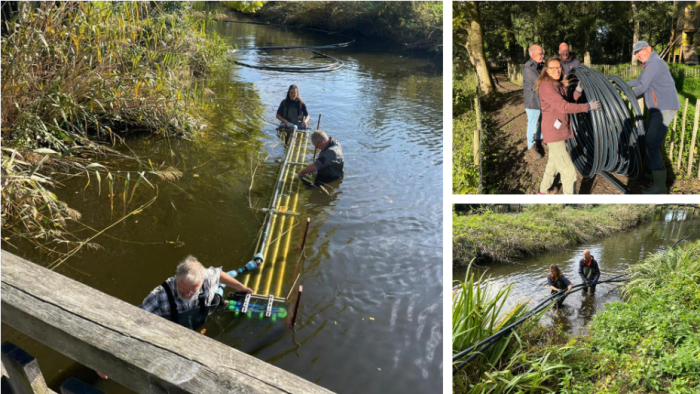
MUSE DHC and the NWE AquaCOM project joined forces to explore the potential of community-led energy production at the European Energy Communities Forum 2026
Decarbonising Europe’s heating and cooling sector is one of the most significant hurdles in the green transition. While technical solutions exist, the real challenge often lies in how these projects are governed, financed, and embraced by local citizens. Addressing these social and governance challenges is the core mission of the LIFE MUSE DHC project, which focuses on empowering citizens to take ownership of their heating and cooling energy.
On May 6, in the seaside town of Jūrmala, Latvia, the session Developing community-led heating and cooling tackled these questions head-on. Organised as part of the European Energy Communities Forum, the workshop brought together experts from MUSE DHC’s partners REScoop.eu and Energie Samen to showcase how collective action can turn aquathermal energy into a community asset.
Navigating the EU policy landscape
While electricity-focused energy communities have gained significant traction, heating and cooling often lag behind in policy recognition.
Tom Vasseur, coordinator of the Cool Heating Coalition highlighted that since heating and cooling account for over 50% of Europe’s final energy consumption, they must be central to local energy planning. The discussion underscored a critical gap: many national frameworks still lack specific guidelines for thermal energy sharing, creating hurdles for communities ready to invest in collective heat pumps or district networks. Navigating these regulatory barriers and integrating community initiatives into formal municipal planning is a primary focus of the MUSE DHC’s ongoing work across Europe.
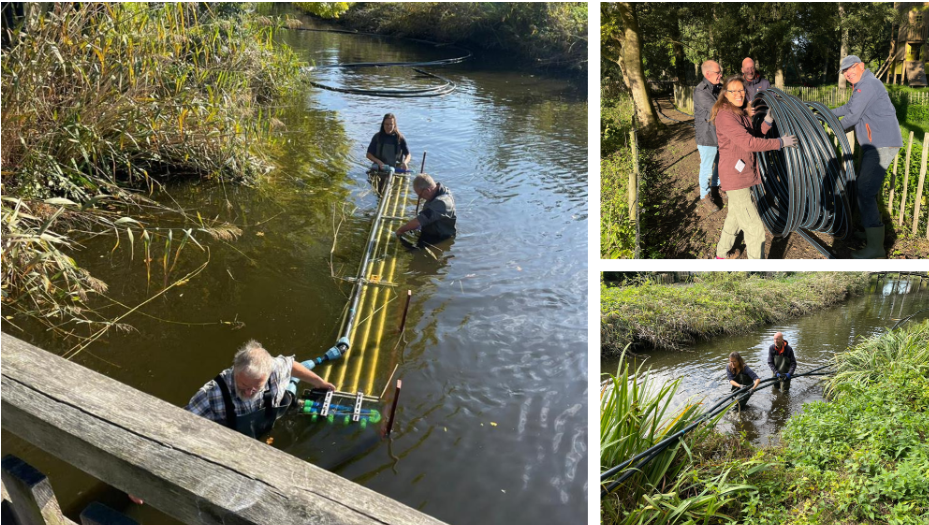
From theory to practice: aquathermal case studies
What does community-led heating look like on the ground? The workshop featured three pioneering “aquathermal” projects from the Netherlands and Belgium, presented by Ilonka Marselis, Energie Samen and Dirk Vansintjan, REScoop.eu.
These examples demonstrate that with the right technical support and community engagement, even unconventional heat sources can be harnessed and heritage sites can be repurposed to provide modern, carbon-neutral warmth.
The path forward: integration and scale
As the event concluded, one message was clear: the heat transition is a social challenge as much as a technical one.
To reach the scale required for EU climate targets, community-led initiatives must be integrated into formal municipal planning. As MUSE DHC continues its work across Europe, the focus remains on empowering citizens to take ownership of their heating and cooling energy, ensuring a transition that is not only green but also fair and resilient.