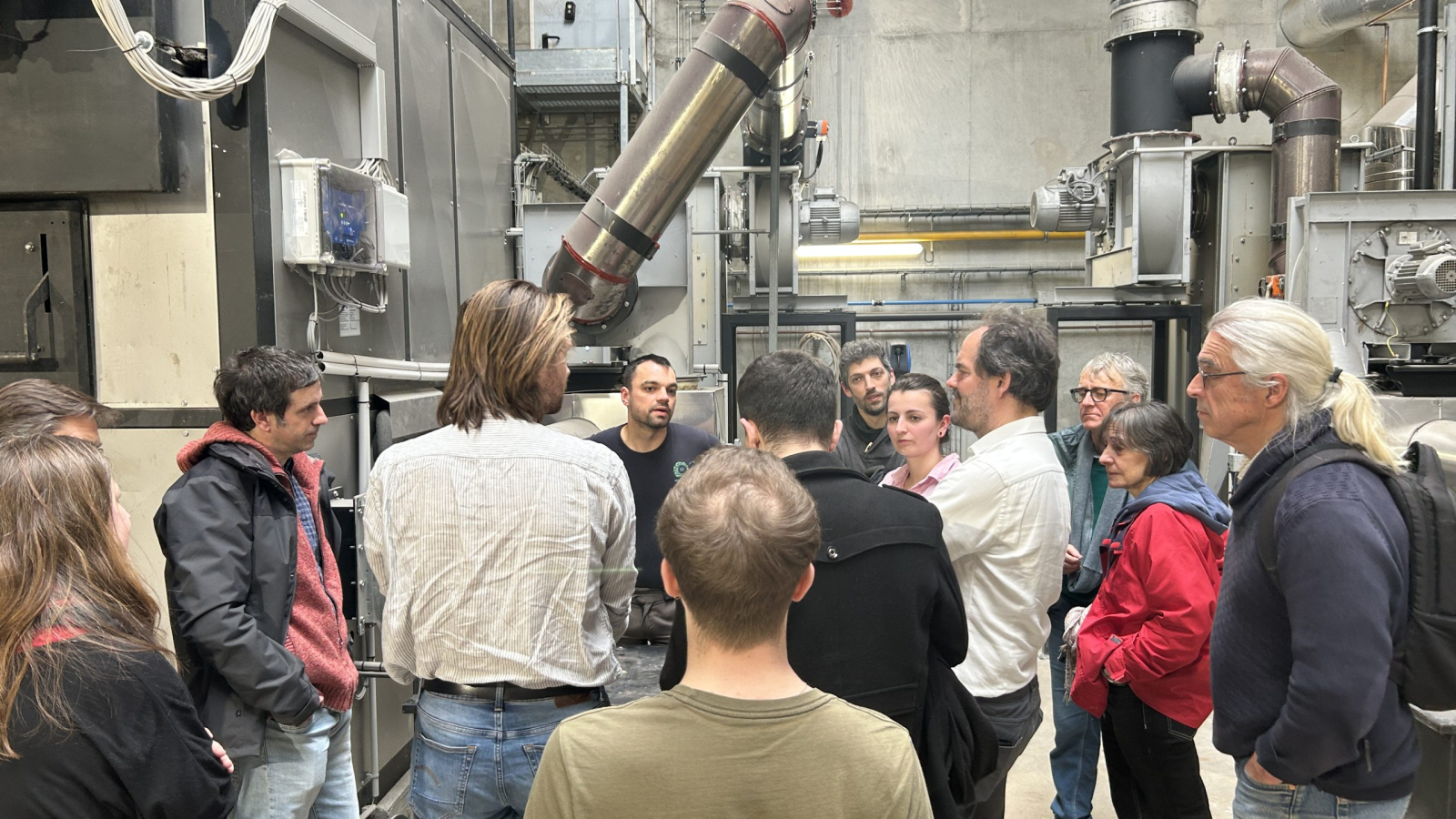
The importance of a comprehensive business model for community-led DHC projects

The importance of a comprehensive business model for community-led DHC projects

Lessons from the MUSE-DHC case study in Larmor-Plage, France

Community-led district heating and cooling (DHC) projects need more than a promising energy source and a well-engineered system. They need a business model shaped around the place, the customers and the way the network will actually operate. The Larmor-Plage case study, developed within the EU-funded MUSE-DHC project, shows why that work must evolve alongside technical design: it helps turn a low-carbon concept into a service that can be financed, operated and trusted by citizens in the long term.

Start with the service, not just the technology

With an expected lifespan of 50 years, DHC networks are long-lived public-service infrastructure. Its performance depends on the relationship between local heat demand, supply technologies, network costs, electricity and fuel prices, customer connections and operating choices. A technically feasible scheme can still face difficult decisions such as affordability, social buy-in, risk allocation, financing and the value of preserving options for future needs.

Also, a useful governance model makes these connections visible. It gives citizens, public authorities, operators, funders and customers a shared basis for decisions about their local energy infrastructure.

Meanwhile, the development of a business model translating engineering assumptions into a long-term view of costs, revenues and risks is a continuous process. It should be updated as the project moves from feasibility into design, rather than treated as a final spreadsheet produced after the key choices have already been made. Each decision has an impact on this document and will need revision.

Larmor-Plage: a local system with several moving parts

At the Kerderff district in the city of Larmor-plage, the studied network will serve a new urban project and municipal buildings, alongside existing and new collective housing, including social housing. As work is ongoing, design (ESQ) updates are recurrent, updating the annual heat and hot-water demand to about 1.35 GWh across ten buildings. The planned network is approximately 1.18 kilometers long. That mix of building types and development stages makes connection assumptions central to both system sizing and revenue planning.

Local geology also shapes this business case. The feasibility work found that vertical boreholes, rather than groundwater-based geothermal energy, were the suitable geothermal option for the site. The concept combines a shallow-borehole field with heat pumps and solar thermal collectors. In the feasibility scenario, the concept included 30 boreholes, each 190 meters deep, and 800 m² of unglased solar collectors. As the project goes on, it is then tested how operating strategy and solar recharge affect performance, cost and the long-term thermal balance of the ground.
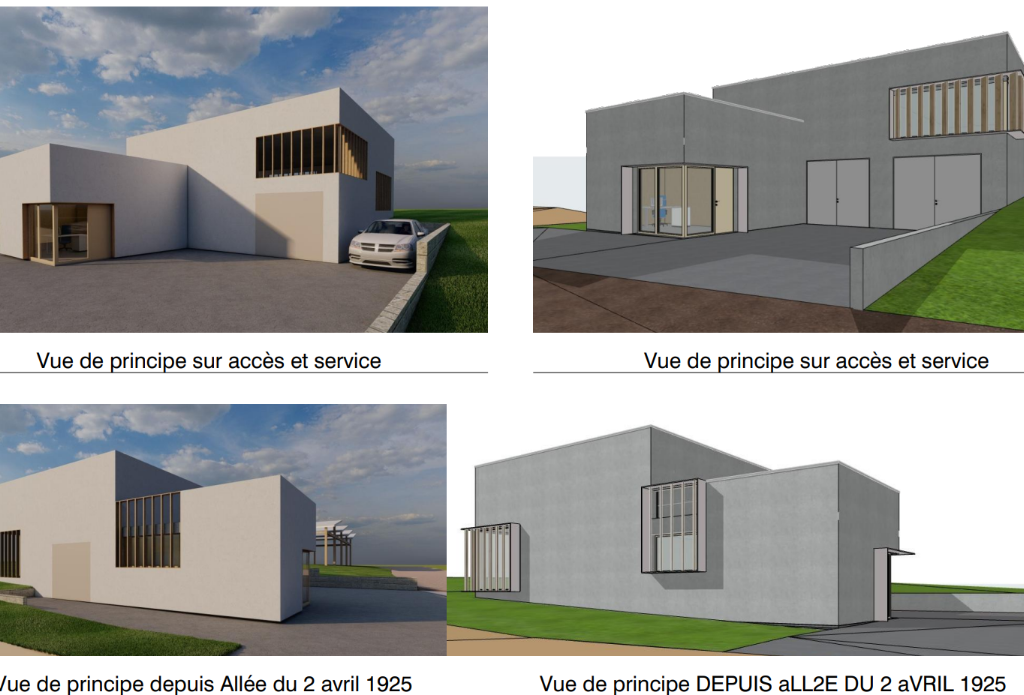

Project by Atelier Le Priol Architecte and Manergy

Compare scenarios before locking in costs

The design simulations exposed a trade-off that a single headline efficiency figure would hide. Some operating strategies improved heat-pump performance but risked drawing too much heat from the ground over time. Other options reduced that pressure but changed the contribution of heat pumps, solar recharge and backup heat. The design team therefore compared alternatives, including an option with 1,360 m² of solar collectors and another retaining 800 m² while limiting heat-pump capacity. The final technical scenario remained to be selected.

These choices have material financial consequences. The preliminary design phase estimate places total project investment at about €2.52 million for the 1,360 m² option and €2.391 million for the 800 m² option. These are design-stage estimates, not final tender prices; they require further technical studies and cost refinement. The design phase also shows that the budget objective appears difficult to meet with current information. That is exactly when a business model is most useful: it can test how capital costs, energy purchases, operating strategy, customer uptake and support mechanisms affect the project’s resilience, and show which assumptions deserve attention first.

Design for customers and for change – Living Lab effect

The network’s prospective customers have different profiles: schools and municipal facilities, new housing, and an elder-care facility. Their heat and hot-water needs do not peak in the same way. Choices about substation design, hot-water storage and peak-load management therefore influence equipment sizing, subscribed capacity, operating costs and the service customers receive. That is exactly when the MUSE-DHC Living Lab – local decision-making forums where citizens, municipalities, and local stakeholders decide over their energy infrastructure – come into action. Developed as part of the project, this committee allows stakeholders to take a central part within the business model decisions. Rather than imposing a predefined, top-down solution, this bottom-up approach ensures that both technical and business-model decisions are grounded in the needs, knowledge and priorities of the community, shaping the network locally. In this committee, this was where the idea of preserving the possibility of supplying cooling in the future was raised. Its recommendation is to avoid investing immediately in a cooling system before demand is established, while checking whether the buried network and plant layout can accommodate later adaptation. This indeed will have an impact on the business model in the end.

A tailored business model should connect these design decisions to a clear offer for each customer group: what the network supplies, how reliability is maintained, how prices are set and adjusted, and how responsibilities are shared. It should make the consequences of uncertainty legible, for example, if buildings connect later than planned or if future cooling demand does not emerge. Transparent scenarios help citizens and decision-makers understand both the benefits and the conditions attached to them.

From feasibility to a durable public service

The Larmor-Plage case study illustrates that a community-led DHC project does not have one fixed business model waiting to be discovered. The model is built through successive decisions: validating demand, comparing technical options, refining investment costs, planning finance and subsidies, defining operating arrangements, and agreeing how the service will work for customers. All of that being discussed in a transparent and bottom-up fashion between the relevant local stakeholders and updating this plan as things go on. Each stage should test the assumptions inherited from the previous one.

For MUSE-DHC, the lesson is practical. Tailoring a business model to local demand, resources and constraints helps project teams and the community identify risks before construction, explain trade-offs in a way stakeholders can use, and adapt the design without losing sight of affordability and long-term performance. Strong engineering makes a DHC system possible; but a strong, citizen-centred business model helps make it investable, dependable and valuable to the community it serves.

Stay tuned to know how the project will develop in the coming months!

ChatGPT Image 1 ott 2026, 15_19_53

Join the MUSE DHC free Support & Peer-to-Peer Coaching Programme!

This call is for you: become a MUSE DHC follower!

We are looking for motivated energy communities, energy cooperatives, small utilities or DHC operators, Local Administrations and other potential developers of district heating & cooling (DHC) projects to benefit from our inspiring experience, best-practices and knowledge gained along the way.

By becoming a follower case, you will learn first-hand from the direct experience of the MUSE DHC 9 real case studies in 5 European Countries of truly community-led DHC developments. The project’s transversality will support the set-up of efficient community-led DHC projects based on the MUSE DHC approach. Our method will allow wide replication of its results, no matter the size of the network, geographical location, or energy mix used.


Heating and cooling account for roughly 50% of EU energy consumption, with more than 75% coming from fossil fuels. Renewable and clean heating and cooling is a key enabler of a sustainable energy transition towards decarbonisation and energy autonomy in the current energy crisis. Increasing energy efficiency and sustainability of this sector is necessary to achieve the targets of the European Green Deal and the REPowerEU plan towards climate neutrality. Furthermore, doing so within an energy community reduces the cost of living and strengthens Europe’s autonomy. According to the European Commission, by participating in an energy community, an average household in Europe can save up to 1100 euros per year (European Commission, ‘Action Plan for Affordable Energy’, 2025).

Because heating and cooling is a fully localised sector, actions must be taken at the local level involving a variety of stakeholders and requiring solutions and technologies adapted to very specific local conditions. District Heating and Cooling (DHC) can be a very effective solution, applicable in a variety of contexts ranging from rural communities to neighbourhoods where the availability of so-called “waste heat sources” often creates extremely favourable conditions to harvest energy to avoid the use of fossil fuels. What is little known is that these projects do not necessarily require the intervention of large, structured and experienced utilities. The community energy concept is proven effective to foster the green transition, although its potential remains significantly untapped in heating and cooling.

By this, we aim to help you develop successful, new community-led district heating & cooling projects that will support the decarbonisation goal.

Scroll down to learn more about the call requirements and fill out the application form.


WHO CAN PARTICIPATE?

Any potential developer of a community-led DHC project, from all over the European Union, can apply to this call, namely photovoltaic-based (or using other types of renewable electricity) energy communities willing to add also heating & cooling supply to their portfolio, energy cooperatives, small utilities or DHC operators, Municipalities, Regions and other public authorities.

WHY TO APPLY?

  • Access key knowledge and expertise on the development of community-led district heating & cooling;
  • Receive direct peer-to-peer support and advice from our experts and engage with key stakeholders from the field;
  • Enlarge your network and get more visibility;
  • Speed up your path towards decarbonisation.

WHICH SUPPORT SHOULD I EXPECT?

The peer-to-peer coaching and support activities will start from your specific needs and different project partners will be activated to help you depending on the topics you would like to focus on.

You could, for example:

  • Receive peer-to-peer coaching with experts from the MUSE DHC team, including first-level technical feasibility of your project, business models and financial plans, reference best practices, etc.;
  • Learn about the step-by-step process to develop new community-led district heating & cooling projects, from citizen-led governance to technical and financial analysis;
  • Understand your local context with its key drivers and barriers;
  • Identify and engage with key stakeholders from your area;
  • Have exclusive access to studies and analyses conducted within the project;
  • Benefit from the project’s extensive networking channels to promote your case and engage with stakeholders.

Coaching and support activities will be held through online meetings, email exchange, phone calls or in-person meetings depending on the needs and opportunities.

FILL OUT THE FORM TO APPLY

Applications must be submitted exclusively by completing the following form by 16 November 2026.

The MUSE DHC project consortium will assess the applications received based on the following criteria:

  • Geographical balance
  • Commitment to a community-led approach, including the involvement of citizens and local stakeholders.
  • Main features of the local energy system
  • Level of experience in H&C decarbonisation plans, in energy strategies and in citizen and stakeholder engagement
  • Ambition, vision and objectives related to the development of community-led DHC.

TIMELINE

  • October 6th, 2026 – Call published

  • November 16th, 2026 – Deadline for submitting applications

  • November 23rd, 2026 – Selection of the followers which will get support from MUSE DHC

  • November 30th, 2026 – Signature of the Memorandum of Collaboration between MUSE DHC and the selected followers

  • January 2027 – Start of the support activities

Empowering your community-led District Heating & Cooling

Take the survey and let us know what you’d like to learn to develop a DHC in your area

Are you interested in developing a citizen-owned district heating and cooling (DHC) network?

Do you already know what you need to make it happen?

If you are interested, then our next initiative is made for you!

From November onwards, we will be offering free coachings online to energy communities and local and regional authorities interested in Community-led Heating and Cooling (CH&C). These peer-to-peer exchanges will cover several key topics that you need to develop such local system. These include citizen mobilisation, working with your local municipality, financing and business models, choices of technology, and many more.

Are you interested?

The sessions dates will be shared with you in the coming weeks. In the meantime, please help us provide you with sessions tailored to your needs – fill in the (very short) survey below before 2 November and let us know which topics you are most interested in! Thank you!


Living lab

Mobilising the local community: MUSE-DHC’s Living Labs

The MUSE DHC journey towards democratically owned district heating and cooling by residents has just started

There are countless reasons why we build communities. For protection, for efficiency, for emergence, for escaping loneliness, or simply because we are drawn to other people. Goethe – the German poet from the 18th century – believed that the world is empty if one thinks only of mountains, rivers, and cities; It is to know someone who thinks and feels with us, and though distant, is close to us in spirit which makes Earth an inhabited garden. It is this same logic of community building that created MUSE-DHC, the European project to democratically decarbonise district heating systems. But why exactly is it better to decarbonise district heating through a community approach?

Firstly, for protection: Producing and consuming local energy locally protects citizens from volatile and expensive fossil fuels, due to the community’s power to control the price of their renewable energy. This is now more needed than ever. Since the onset of the US-Israel war on Iran, the EU’s energy bill has increased by €47 billion. According to the European Commission, this increase is “without a single molecule of energy in addition”, meaning that we are paying much higher bills for the same energy consumption. A community approach to renewable heating and cooling can immediately solve this issue.

Secondly, for efficiency: Communities can better pool resources together. Our national budgets are under heavy pressure, and maintaining the current level of public investment, with the existing taxation, will likely be insufficient to achieve our climate goals. However, by bringing citizens, municipalities, small businesses, and technical partners together, MUSE-DHC will be able to pool our resources and transition our societies using all the currently available funds.

Thirdly, to keep the benefits local: Community-led and financed renewable energy projects generate two to eight times more return for the local economy[1], compared to installations by external commercial developers. A community approach ensures that the product of our labour does not go into the pocket of a faceless investor, but remain instead within the community that built the project.

Lastly, and most importantly, building a district heating and cooling system as a community reinvigorates our democracies and strengthens the link between neighbours.

How are we mobilising the community?

MUSE-DHC is building energy democracy through a bottom-up governance and participation approach. Each of our nine case studies started their journey to develop democratically owned district heating by directly engaging the community.

As a first step, our partners brought together local citizens, municipalities, and small businesses across Ireland, the Netherlands, Italy, Spain, and France. The objective was to inform them about the project, identify their needs, and create a shared vision for renewable energy, and in particular district heating. By giving decision-making power directly to the local community, MUSE-DHC aims to create a truly democratic transition.

Once the local communities were engaged, the second step was to formalise and professionalise the local project through the creation of a Living Lab. Each “Lab” is composed of local community members and prioritises the technical and non-technical aspects of the project. Specifically, the lab enables citizens to decide upon the type of renewable energy, the timeline of the project, and the decision-making process to ensure equality among the community members. The communities participating in the Living Labs will make decisions over their local district heating, which will be implemented by the MUSE-DHC pilots.

What do we expect?

Contrary to traditional market actors – such as big businesses – by engaging the local community, giving them decision-making powers, and creating a regular forum for discussion, MUSE-DHC is creating a truly democratic renewable energy landscape.

We expect that this process will give back control to communities over their local resources and ensure stable prices, while cementing public trust in renewable energy, and strengthening the cooperation between citizens and their municipalities.

Stay tuned!


[1] https://energie-partagee.org/ressource/etude-retombees-eco-2/ ; https://www.rescoop.eu/uploads/rescoop/downloads/RWS_Wind_CDW.pdf

Inspiring community-led energy production

Inspiring community-led energy production

MUSE DHC and the NWE AquaCOM project joined forces to explore the potential of community-led energy production at the European Energy Communities Forum 2026

Decarbonising Europe’s heating and cooling sector is one of the most significant hurdles in the green transition. While technical solutions exist, the real challenge often lies in how these projects are governed, financed, and embraced by local citizens. Addressing these social and governance challenges is the core mission of the LIFE MUSE DHC project, which focuses on empowering citizens to take ownership of their heating and cooling energy.

On May 6, in the seaside town of Jūrmala, Latvia, the session Developing community-led heating and cooling tackled these questions head-on. Organised as part of the European Energy Communities Forum, the workshop brought together experts from MUSE DHC’s partners REScoop.eu and Energie Samen to showcase how collective action can turn aquathermal energy into a community asset.

Navigating the EU policy landscape

While electricity-focused energy communities have gained significant traction, heating and cooling often lag behind in policy recognition.

Tom Vasseur, coordinator of the Cool Heating Coalition highlighted that since heating and cooling account for over 50% of Europe’s final energy consumption, they must be central to local energy planning. The discussion underscored a critical gap: many national frameworks still lack specific guidelines for thermal energy sharing, creating hurdles for communities ready to invest in collective heat pumps or district networks. Navigating these regulatory barriers and integrating community initiatives into formal municipal planning is a primary focus of the MUSE DHC’s ongoing work across Europe.

Inspiring community-led energy production
Soester Energie

From theory to practice: aquathermal case studies

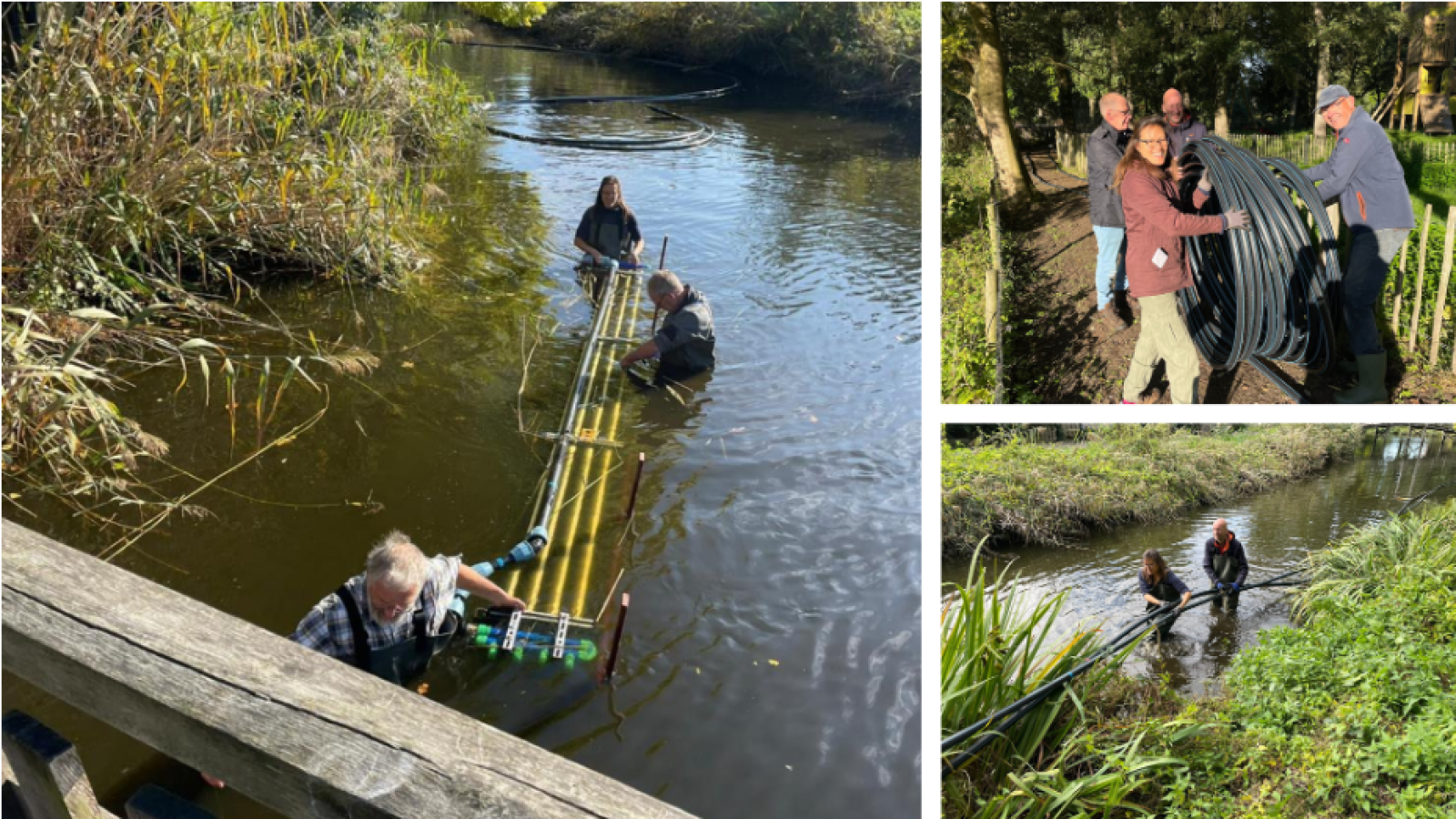
What does community-led heating look like on the ground? The workshop featured three pioneering “aquathermal” projects from the Netherlands and Belgium, presented by Ilonka Marselis, Energie Samen and Dirk Vansintjan, REScoop.eu.

These examples demonstrate that with the right technical support and community engagement, even unconventional heat sources can be harnessed and heritage sites can be repurposed to provide modern, carbon-neutral warmth.

The path forward: integration and scale

As the event concluded, one message was clear: the heat transition is a social challenge as much as a technical one.

To reach the scale required for EU climate targets, community-led initiatives must be integrated into formal municipal planning. As MUSE DHC continues its work across Europe, the focus remains on empowering citizens to take ownership of their heating and cooling energy, ensuring a transition that is not only green but also fair and resilient.

EUSEW's article

Warm homes, lower bills, stronger EU: the power of citizen-led energy networks

How can  we all enjoy comfortable homes while paying fair bills? 

The EU has many solutions to reach climate neutrality and become energy independent, but none will succeed without active citizen participation to ensure a just and effective transition.  

Efficient district heating and cooling (DHC) networks powered by clean sources replace individual heating systems, reducing maintenance and lowering bills.  

As change starts in cities, citizen engagement is essential. EU-funded projects such as MUSE DHC are a great example of how community energy initiatives can foster social acceptance, co-ownership, and long-term commitment, making cities, thus Europe, more sustainable, resilient and energy independent.

Click on the button to explore the full article, published by the European Sustainable Energy Week (EUSEW), which highlights the strategic importance of DHC networks through the MUSE DHC case studies of  Sant Cugat Sesgarrigues and  Zwolle.


The European Sustainable Energy Week (EUSEW) is the biggest annual event dedicated to renewables and efficient energy use in Europe. EUSEW 2026 marks the 20th edition. EUSEW organises a series of activities that bring together the community of people who care about building a secure and clean energy future for the next generations.

European Energy Communities Forum

Developing community-led heating and cooling

On 5 May,  MUSE DHC will explore how national and EU frameworks can support community-led initiatives

How can we accelerate the decarbonisation of Europe’s heating and cooling sector? 

While progress depends on strong regulatory frameworks, enabling measures, and political leadership, experience shows that community-led approaches can significantly speed up the transition of Europe’s heating and cooling sector. To help unlock this potential, energy communities across Europe are increasingly exploring and installing innovative thermal energy systems.

On Tuesday, 5 May, The MUSE DHC’s partners  REScoop.eu, the European federation of energy communities, and Energie Samen, the Dutch federation of energy communities,  will facilitate the session Developing community-led heating and cooling in Jūrmala, Latvia. Co-organised with the Interreg NWE AquaCOM project, this session will explore how national and EU frameworks can become supportive of community-led initiatives, as well as the technologies, financing schemes and engagement strategies making them a reality.

Understanding the framework and aquathermal potential

The 90-minute session will kick off with setting the stage for community-led heating and cooling initiatives. REScoop.eu will open the discussion with an exploration of the EU Heating and Cooling Strategy and the Guidelines on Community Heating and Cooling.  Understanding this policy landscape is vital, especially considering that the heating and cooling sector represents over 50% of Europe’s final energy consumption and is responsible for a major share of emissions.

Inspiring case studies: real-world solutions

Participants will discover practical examples of communities taking charge through inspiring real-world case studies from Belgium and the Netherlands. Speakers Ilonka Marselis and Dirk Vansintjan will present three inspiring aquathermal projects: Warmte uit de sloot (heat from the ditch, Warmte uit de gracht (heat from the canal), and Van de Dijle tot de douche (From the Dijle to the shower).

Thriving communities for a renewable energy future

Developing community-led heating and cooling is organised within the European Energy Communities Forum, happening from 5 to 7 May in Jūrmala, Latvia. Inspired by the resilience and creativity of rural communities, and grounded in the work of the Latvian Rural Forum, the three-day event will bring people together to grow the energy democracy movement and unlock its full potential.

Details

  • Date & Time: Tuesday, 5 May 2026, 16:00—17:30
  • Location: Room ASPAZIJA, Jūrmala, Latvia
  • Organisers: Co-organised by the Interreg NWE funded project “AquaCOM” and the LIFE funded project “MUSE-DHC”
  • More information: https://www.energycommunitiesforum.eu/